Places
Could Stratford feel like home?
Arts, green spaces and a welcoming community make Stratford a place many Canadians are calling home.
Community focus
The valley never really left retirement shortlists. Here is what keeps drawing people to it, and what deserves a harder look before you commit.
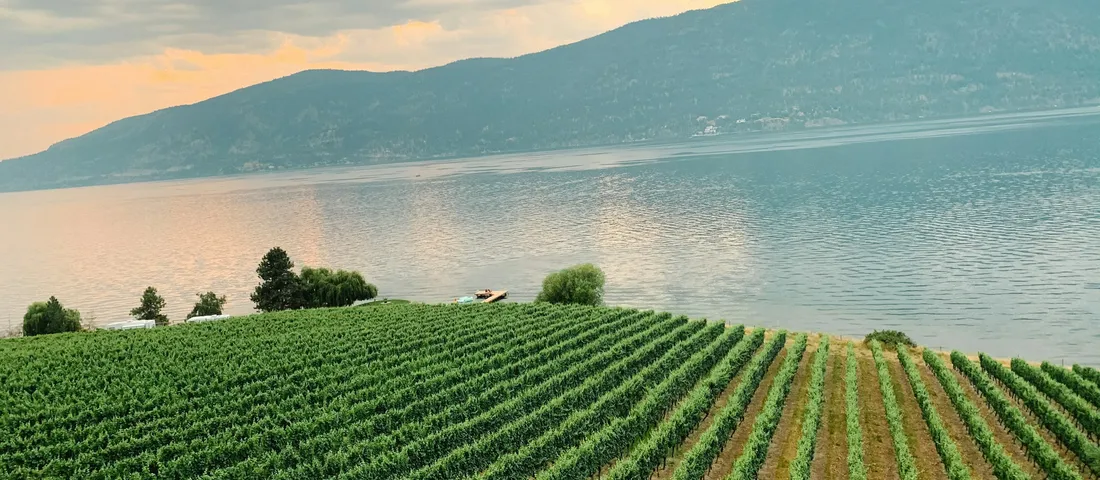
Start with the geography. The Okanagan is a long chain of lakes in the southern interior of British Columbia, with dry hills on one side of the road and orchards, vineyards and beaches on the other. It is generous in summer and in the shoulder seasons, and people who visit in September tend to start doing arithmetic on the drive home.
Winter is the other half of the appeal. Penticton’s January average is about −0.8 °C (Environment and Climate Change Canada normals, 1991–2020). That is still cold, but it is a long way from a prairie January: Saskatoon’s is −14.3 °C. The valley does get snow, roughly 60 cm a year at Penticton’s airport station, but it tends to come and go rather than settle in for the season.
Penticton is the part of the valley we have researched in full. It sits between Okanagan Lake and Skaha Lake, and our guide leads with the lake walks, the Kettle Valley Rail Trail, the SS Sicamous and the vineyards close by. Penticton Regional Hospital is in the city itself.
It is also a small city, with 36,885 people at the 2021 census, so most errands are short. What the guide flags is the practical side: plan for summer conditions, and think about how you will get around once driving is no longer the easy option.
The usual pitch is that the valley costs less than the coast. Sometimes that is true, and it depends heavily on the month, the neighbourhood and the kind of home. We do not yet have a verified current Penticton price to quote you, and we would rather say so than round one up from memory.
Ask the local real estate board for its latest monthly figures, and note which measure it uses: average, median and benchmark prices can differ by a lot for the same market. For scale, the benchmark price of a single-family home in the Victoria area was $1,301,800 in August 2026, according to the Victoria Real Estate Board. Compare like with like, and compare the whole cost of living rather than the purchase price alone.
Hot, dry summers are the reason the valley looks the way it does, and they come with costs. Many summers bring heat waves and, in some years, wildfire smoke. If you have a heart or lung condition, or you like to live with the windows open, ask people who live there how recent summers have gone.
Check the practical details of any home you are considering: air conditioning, insurance terms in wildfire-prone areas, and the ways in and out of the neighbourhood. None of this rules the valley out. It is simply better to know about it in the first visit than in the third summer.
Go twice. Once in late summer, when the valley looks like the brochure, and once in February, when it looks like a small city in winter. Do the ordinary things: a grocery shop, a pharmacy visit, a walk in the rain.
Ask, too, how easy it is to find a family doctor. That is a pressure point across much of the country, and the answer changes from town to town faster than any statistic.
Places
Arts, green spaces and a welcoming community make Stratford a place many Canadians are calling home.
Places
Twenty minutes apart in the East Kootenays, and genuinely different places to spend a retirement.
Places
Property listings love measuring distance from places you've never heard of. Here's how to measure it yourself.